Learning Analytics: Predicting Success Without Boxing Students In
Early-warning systems, dashboards, dropout models: learning analytics promises to act before failure — at the cost of high ethical demands.
Early-warning systems, dashboards, dropout models: learning analytics promises to act before failure — at the cost of high ethical demands.
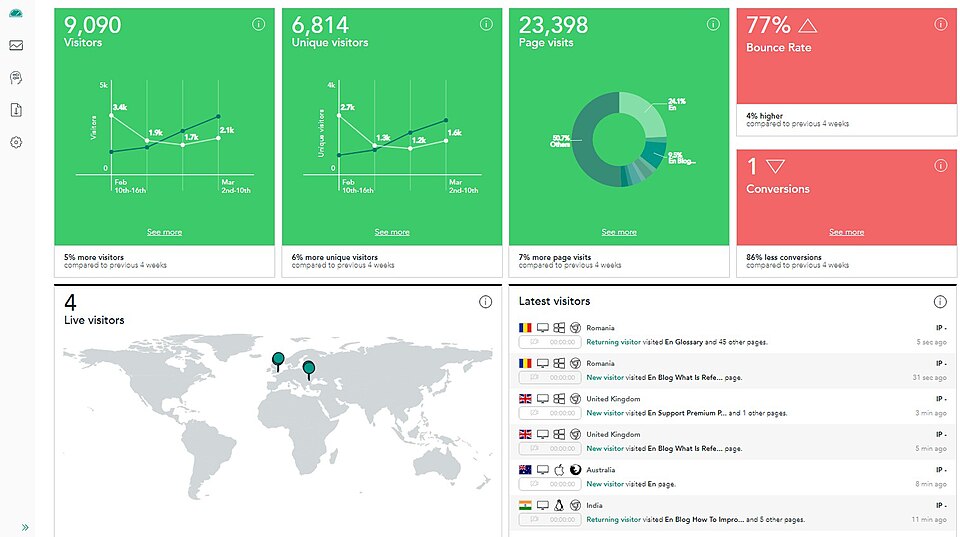
Every interaction with a learning platform leaves a trace: time spent, exercises attempted, recurring errors. Learning analytics turns these traces into actionable information — spotting a struggling student before failure, adjusting a course, personalising support. The promise is strong; the ethical pitfalls just as much.
Early-warning systems combine platform data and predictive models to flag at-risk learners. Recent work shows full 'predict-intervene-evaluate' cycles pairing algorithmic prediction with human support networks [1], and dropout-risk models from online activity [2]. Open datasets like OULAD (over 32,000 students) standardise research and early identification [3].
A major risk stalks these models: relying on static characteristics rather than actual learning. One study shows demographic variables can dominate risk predictions (up to about two-thirds of importance), enabling early flagging but threatening to perpetuate inequities when demographics act as a proxy for systemic barriers [4]. Predicting that a student of a certain profile will fail is not a diagnosis: it is a mirror of past bias.
The learning-analytics community takes these issues seriously. 'Responsible AI' frameworks propose operational principles — transparency, fairness, accountability — to avoid unequal support across groups [5]. Student-centred work shows learners see transparency as something to be actively cultivated, and argue for continuous, measurable consent rather than binary [6]. The LAK conference, the field's showcase, now puts responsible data use front and centre [7].
A model that predicts failure without helping avoid it does not analyse learning: it judges it.
Learnya synthesis
Learning analytics inherently touches sensitive personal data; its legitimacy rests on strict governance — an imperative reinforced in European and Swiss contexts. Well governed, it helps act early and allocate attention better; poorly governed, it surveils and confines.
A predictive model spots regularities, not causes. Knowing that a set of signals foreshadows dropout risk does not explain why, nor what to do. Confusing correlation with causation can lead to useless or even counterproductive interventions — for example targeting a student based on their profile rather than their actual difficulties. The value of a warning system lies in the relevance of the action it triggers, not in its statistical accuracy alone [1].
The best-documented danger is the self-fulfilling prophecy. If static variables dominate prediction [4], the system risks durably labelling certain students, steering attention and resources in a way that confirms the forecast. A dashboard displaying a 'risk' without context can thus weigh on a teacher's perception and a student's self-esteem. Transparency about what the model measures — and does not — is essential.
This is why the community is shifting the requirement from performance toward responsibility: fairness, accountability, continuous and revisable consent [5][6]. Since learning data is inherently personal and sensitive, its use calls for strict governance and a purpose clearly in the learner's service. Well governed, learning analytics helps act early and accurately; poorly governed, it becomes a surveillance tool that judges instead of helping.
The value of learning analytics is not measured by the sophistication of its models, but by the quality of the human decisions it informs. A dashboard only makes sense if it triggers a caring, relevant action: a conversation, support, an accommodation. Without that loop, data remains a sterile observation, at best useless, at worst stigmatising.
The field's responsible evolution will run through more transparency for learners, genuinely revisable consent, and systematic bias audits. Learning data belongs first to the student; analysing it is a service rendered to them, not surveillance imposed on them. By keeping this principle central, and controlling data governance, learning analytics will keep its promises without betraying trust.
Ultimately, learning analytics works best when students are participants rather than subjects. Sharing dashboards with learners themselves, explaining what signals mean, and letting them contest or contextualise a flag turns surveillance into self-knowledge. A student who understands their own patterns of study can act on them; a student merely scored by a hidden model cannot. Designing analytics for learner agency, not just institutional oversight, is the surest way to keep the practice both effective and legitimate.