AI and Education: Accessibility Lever or New Divide?
Real-time translation, image description, disability adaptation: AI can widen access to learning — as long as it does not reproduce bias.
Real-time translation, image description, disability adaptation: AI can widen access to learning — as long as it does not reproduce bias.
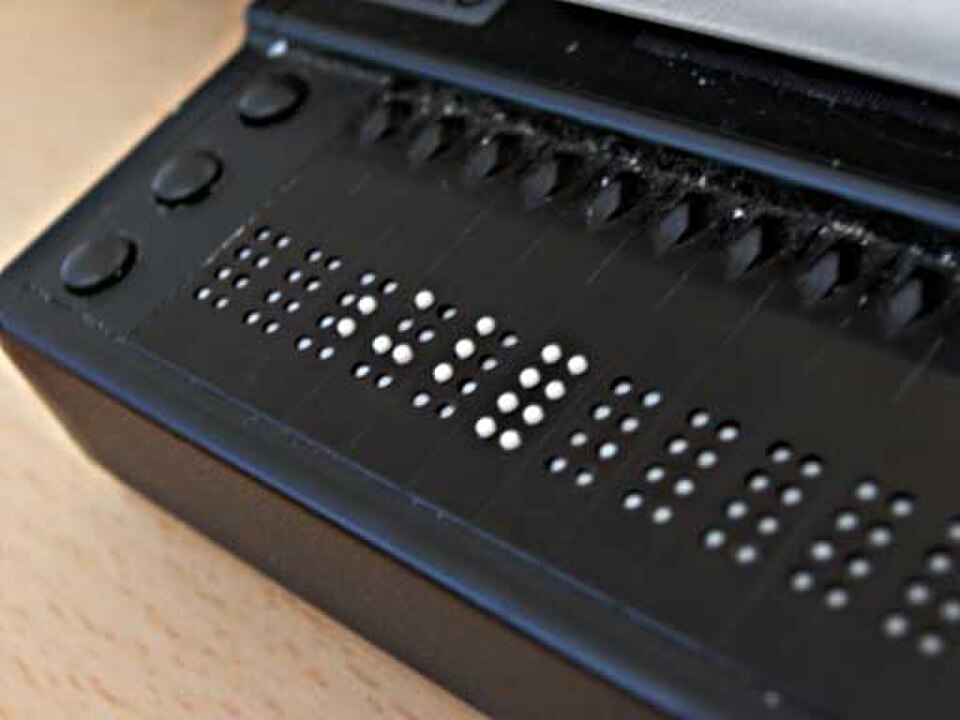
Accessibility is arguably where AI delivers its most concrete promises. Describing an image for a visually impaired student, captioning a lecture, transcribing speech, translating in real time, rephrasing a complex prompt: all tasks once costly that AI makes scalable. But the same technology can also widen gaps if we are not careful.
For learners with disabilities, AI (image description, speech recognition, captioning, translation) is a strong lever for inclusion [1]. A case study of visually impaired students describes generative AI as a supportive instrument that genuinely increases access and participation [2]. In multilingual classrooms, real-time translation lowers language barriers and personalises support [3].
This aligns with Universal Design for Learning (UDL) principles: offering multiple means of representation, action and engagement. Aligning AI's generative capabilities with UDL enables more flexible, inclusive pathways [4]. AI can also extend quality education to communities speaking low-resource languages long ignored by technology [5].
The divide is also material. The 2025 AI Index notes that access to computing and AI in schools is growing but remains very uneven — infrastructure, down to electricity, is missing in many countries, and fewer than half of the relevant teachers feel equipped to teach AI [7]. The promise of equity meets the reality of resources.
AI is inclusive only if inclusion is a design goal, not a hoped-for side effect.
Learnya synthesis
For European and Swiss education systems, the challenge is to combine accessibility with protecting the data of vulnerable audiences — often minors carrying sensitive information. Equity through AI is built: audits, co-design, transparency, and an infrastructure baseline that leaves no one behind.
It is tempting to believe a useful tool will naturally benefit everyone. The history of educational technology says otherwise: without explicit intent, innovation first benefits the best resourced, widening the gap instead of closing it. Surveys already show this risk with AI, whose adoption and training are lower in disadvantaged settings [7]. Equity is not an automatic outcome; it is a goal of design and public policy.
Co-design with affected people is a key. An accessibility feature designed without learners with disabilities often misses their real needs, or even disserves them. Studies that give these audiences a voice show generative AI becomes genuine support when it addresses uses identified with them [2]. Listening before deploying is not a nicety: it is a condition of effectiveness.
Then comes vigilance about bias. A model trained on unrepresentative data can underperform for low-resource languages, minority accents or atypical forms of expression [5][6]. Auditing, testing on diverse populations and correcting continuously must be part of the lifecycle. AI can lower historic barriers to knowledge — provided equity is treated as a front-line requirement, not a hoped-for side effect.
Of all AI uses in education, accessibility is perhaps the one where the net benefit is clearest: giving a learner with a disability access to content previously out of reach concretely changes a trajectory. This potential is real and already documented. But it will only materialise at scale if equity is treated as an explicit, measured and funded goal.
The coming years will tell whether AI narrows the educational divide or widens it. The answer will depend less on the models than on collective choices: investing in infrastructure where it is missing, co-designing with affected audiences, auditing biases, and ensuring the data of the most vulnerable is protected. Inclusion is not a by-product of technology; it is a decision one makes, or misses.
None of this is free. Accessibility gains that depend on reliable devices, connectivity and trained staff will bypass exactly the learners who need them most unless funding follows intent. The lesson from decades of educational technology is consistent: equity is a budget line and a policy choice, not an emergent property of clever tools. Pairing capable AI with deliberate investment where needs are greatest is what turns a promising demonstration into a right genuinely extended to all.